Hello, everyone!
This is Akita, a creator at OUKA FLOWER.
This time, we’ve put together how to turn hoozuki (Chinese lantern) — one of the classic sights of Japanese summer — into dried flowers, along with ways to use them.
Table of Contents
What Is Hoozuki?
Basic characteristics:
Hoozuki (鬼灯 / 酸漿), also known as the Chinese lantern plant, is a perennial of the nightshade family (genus Physalis) — the name also refers to its fruit.
After flowering, the calyx develops into a papery husk that wraps around the fruit, taking on a vivid vermilion or orange color toward early autumn.
In early summer (around June–July), it produces small, pale yellowish-white flowers. After pollination, the calyx grows rapidly into a lantern-like husk (a persistent calyx) that encloses the round fruit inside. Hoozuki keeps well as both a cut flower and a dried flower, and is prized as a floral material and interior accent that carries the feeling of high summer sliding into the first hints of autumn.
Origin of the name, and a bit of play:
One theory holds that the name comes from an old children’s pastime: you carefully remove the seeds from a ripe fruit, hold the empty skin in your mouth, and puff air into it to make a squeaking sound — puffing out your cheeks (“hoo”) as you do so — which gave rise to “hoo-zuki.”
Ties to Japanese culture and seasonal events:
Because its plump red husk resembles a paper lantern, hoozuki is displayed on Obon altars and household Buddhist altars, standing in for the “welcoming fire” or “lantern” that helps ancestral spirits find their way home during the Obon season.
The Dried-Flower Technique at OUKA FLOWER
Introducing dried hoozuki:
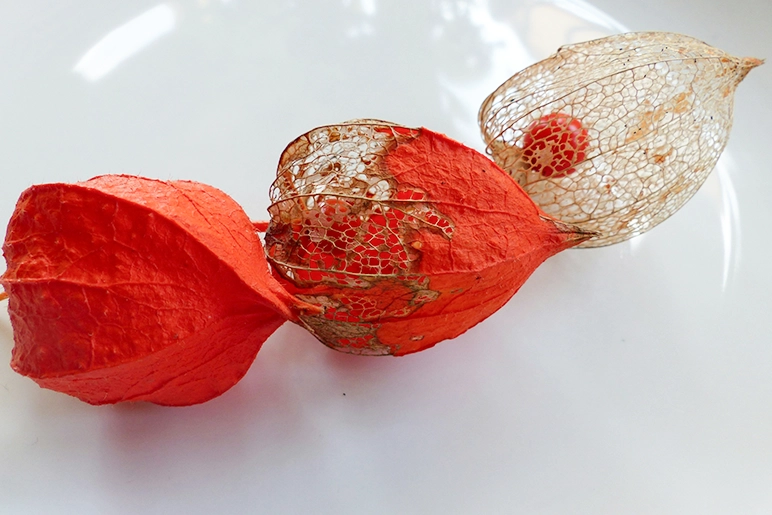
Dried hoozuki has a distinctive quality unlike other floral materials. The processed form is called “sukashi hoozuki” (skeleton hoozuki / lace lantern): the flesh and skin tissue are broken down and removed from the papery calyx, leaving only the leaf veins — a fine mesh of fibers. The result looks like a bright red round fruit sealed inside a delicate lace basket.
The main method:
The common approach is the water-soaking method (natural fermentation): a fully ripened hoozuki is submerged in water for one to two weeks so the skin ferments and softens.
Here is a fully ripened fresh hoozuki:
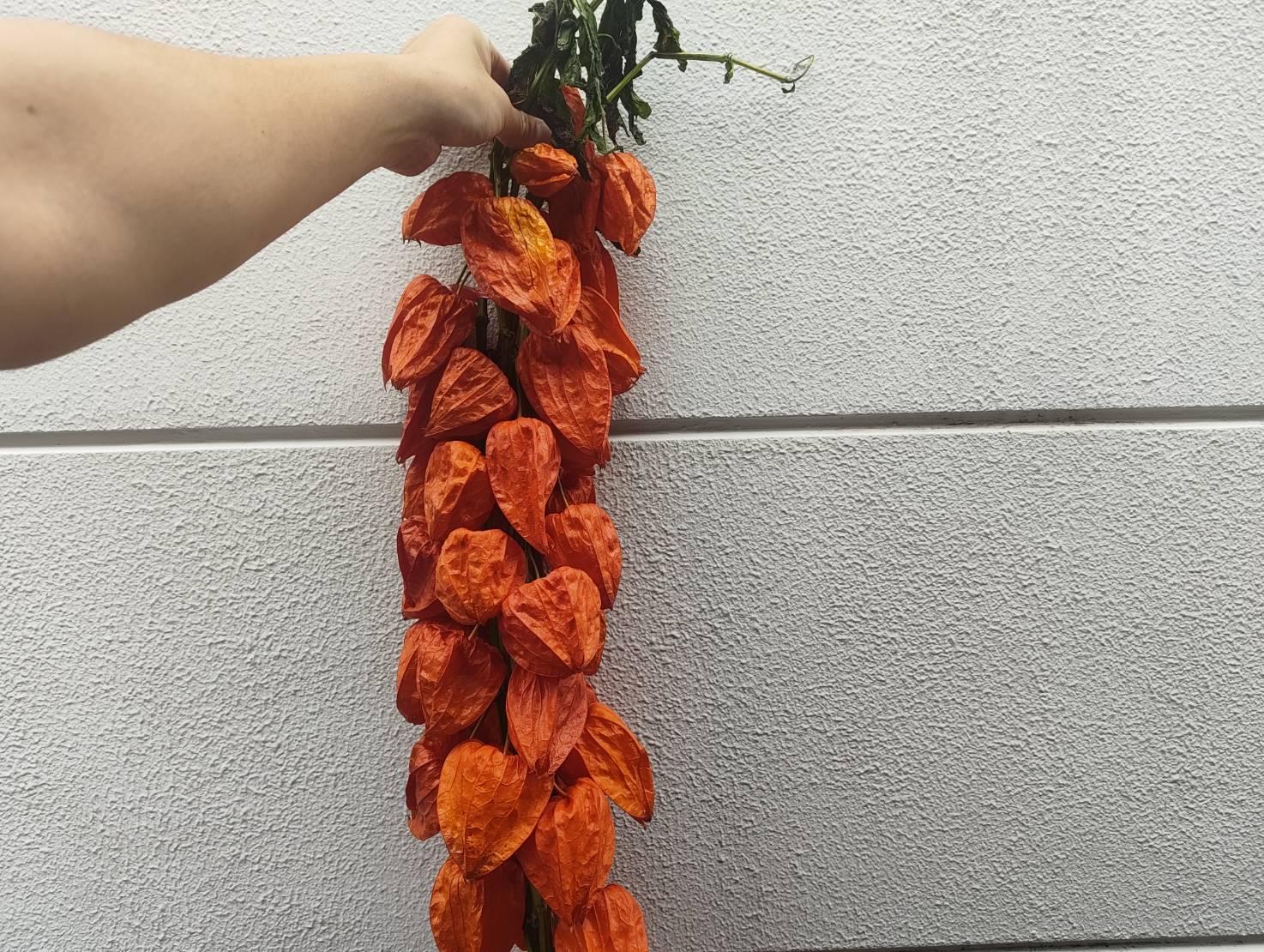
Normally you soak fresh hoozuki in water to process it, but we wanted to test something: can you still make sukashi hoozuki from a dried-out, moisture-depleted one? So we ran a comparison.
We soaked two versions in separate containers — a fully ripened fresh hoozuki and a moisture-depleted dried hoozuki — to see which one is easier to process.
Here is the dried hoozuki:
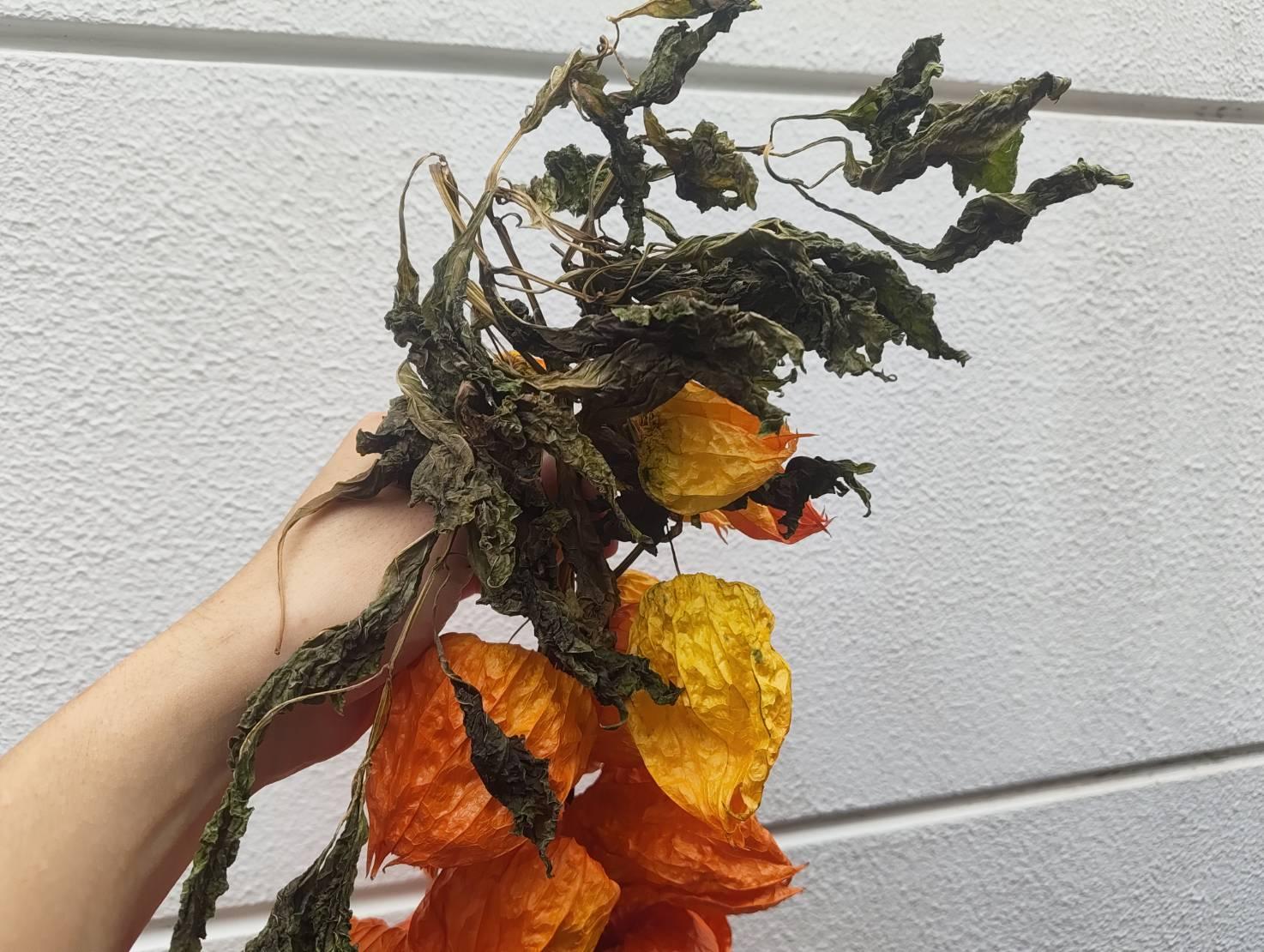
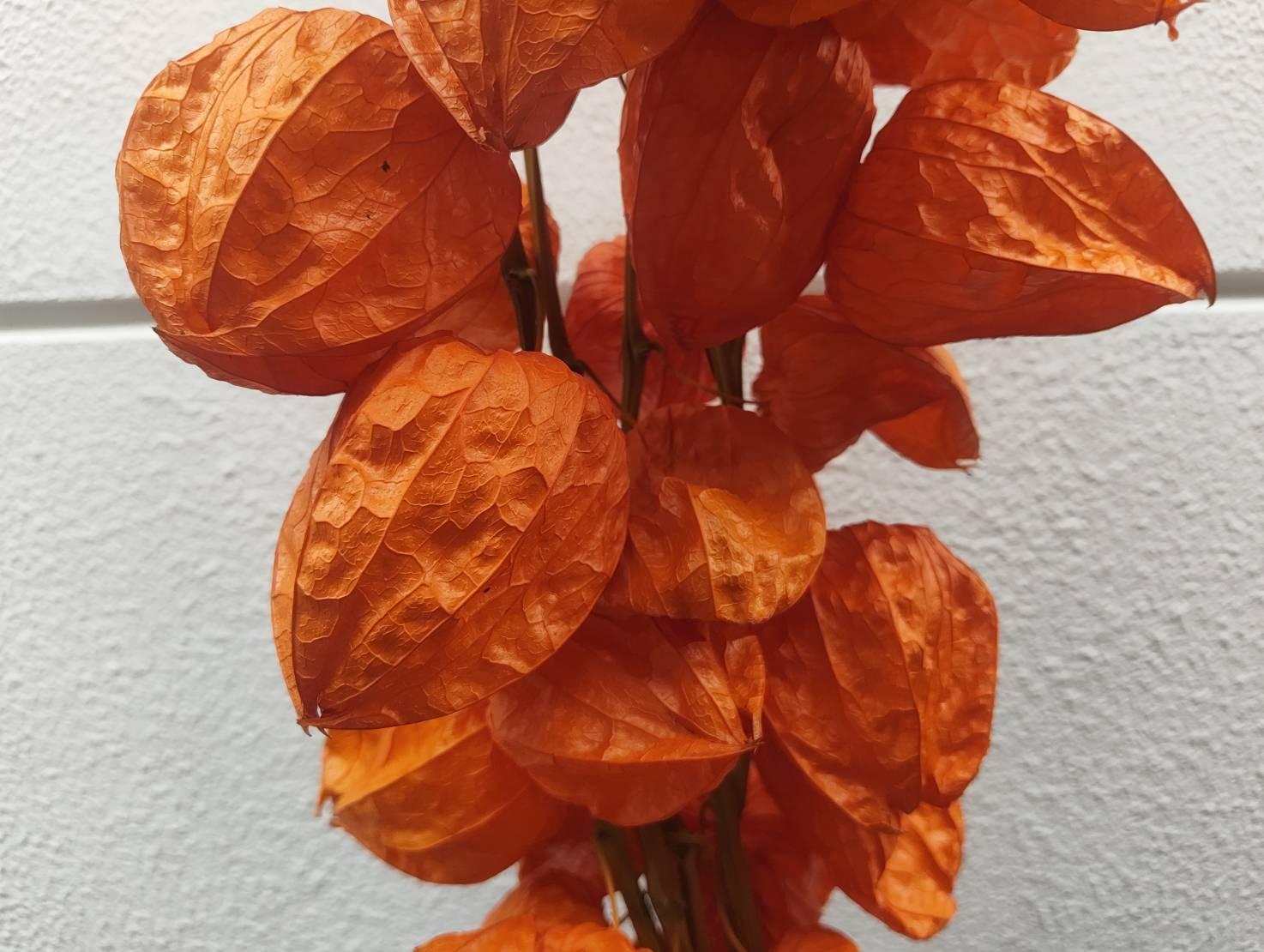
It’s hard to tell from the photo, but the skin is wrinkled and so dry that it cracks when you touch it.
Soaking in water:
Fill a bucket with fresh water and sink the hoozuki in it.
Here’s how they look in the bucket. On the left is the fresh hoozuki, on the right is the dried hoozuki (see photo below).
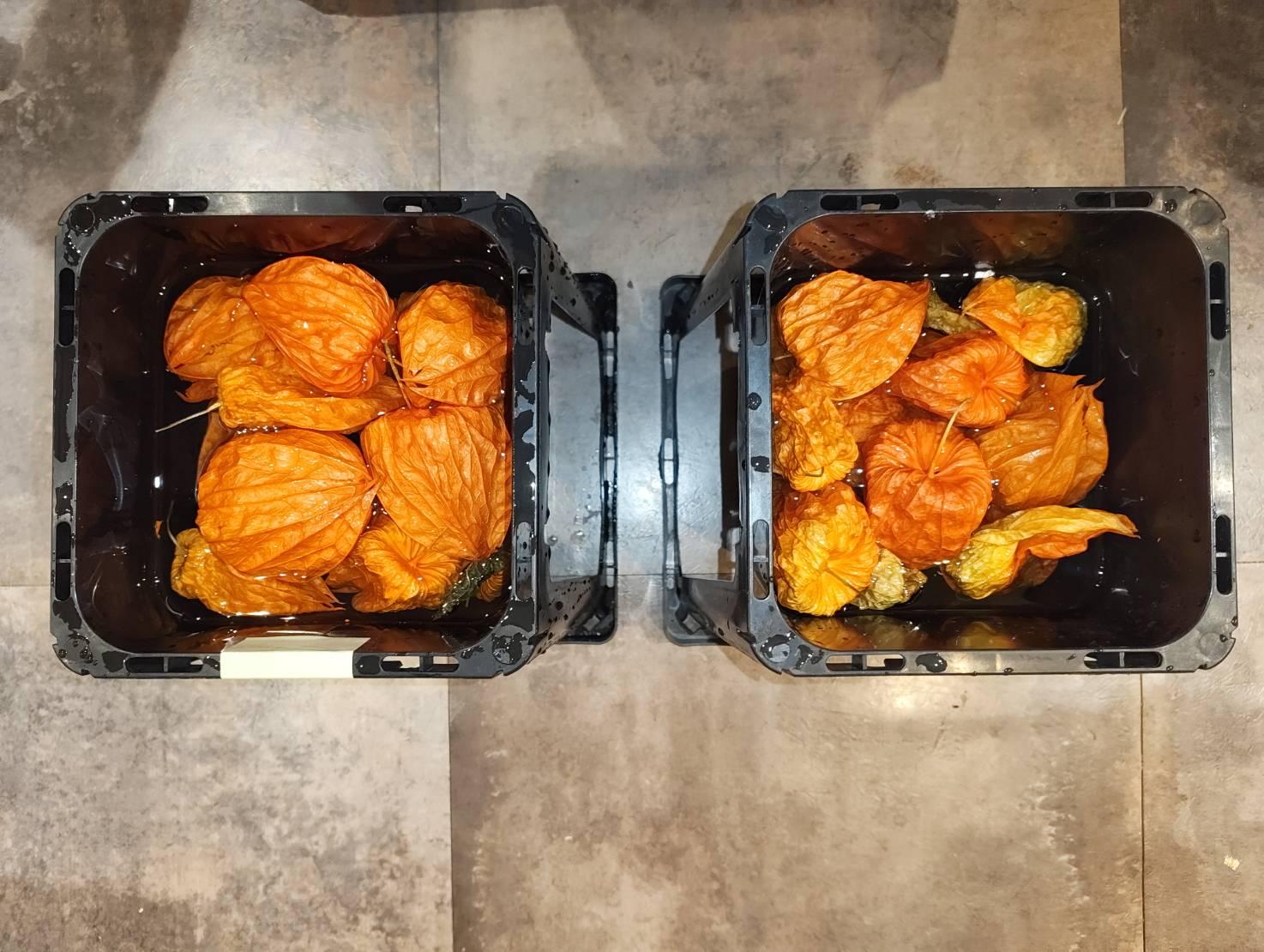
A close-up of the fresh hoozuki:
Because hoozuki is light and tends to float, we weighed it down with aluminum foil used like a lid to keep it submerged. We’ll leave it like this for about two weeks and watch to see which one is ready to process first.
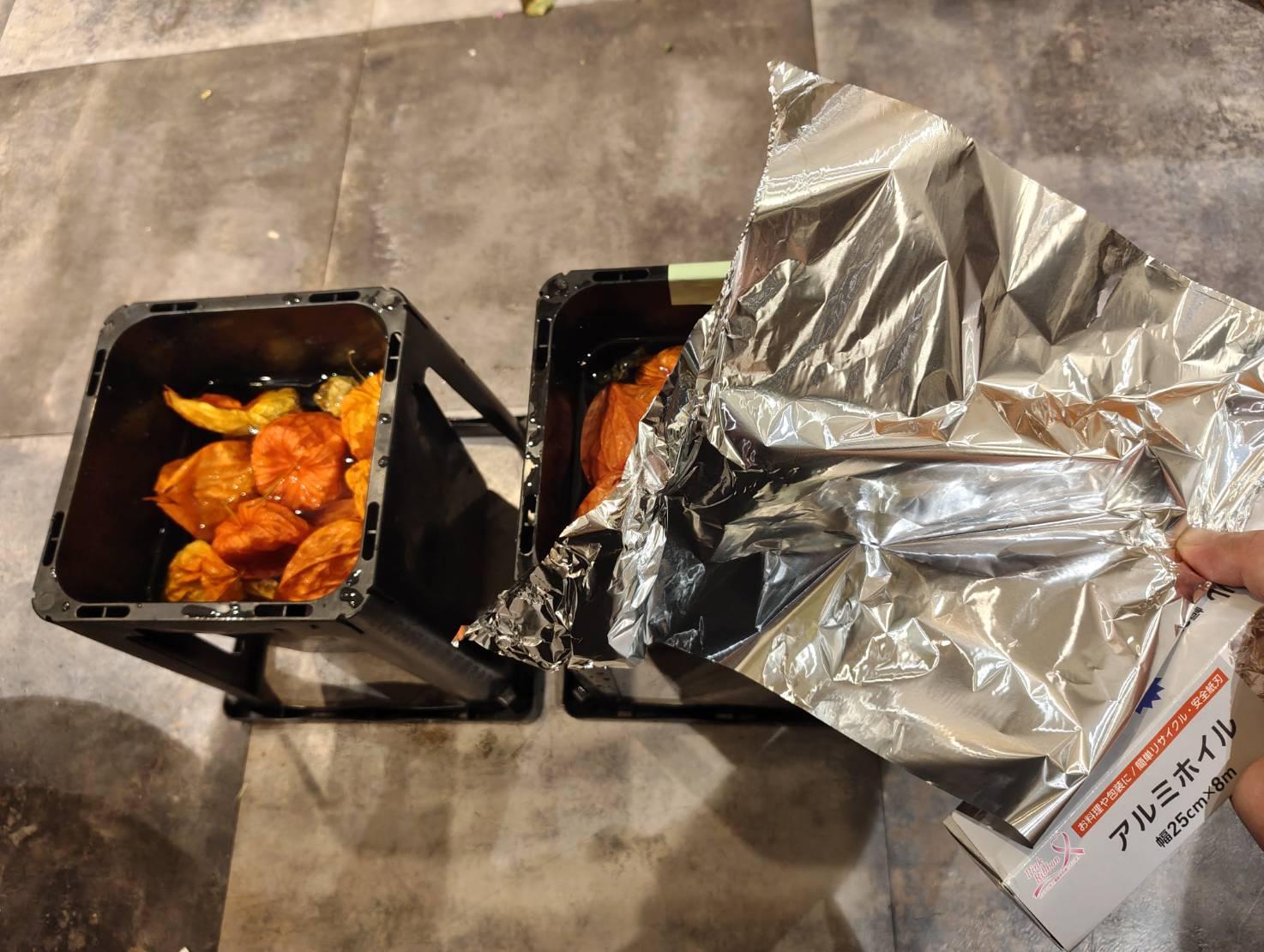
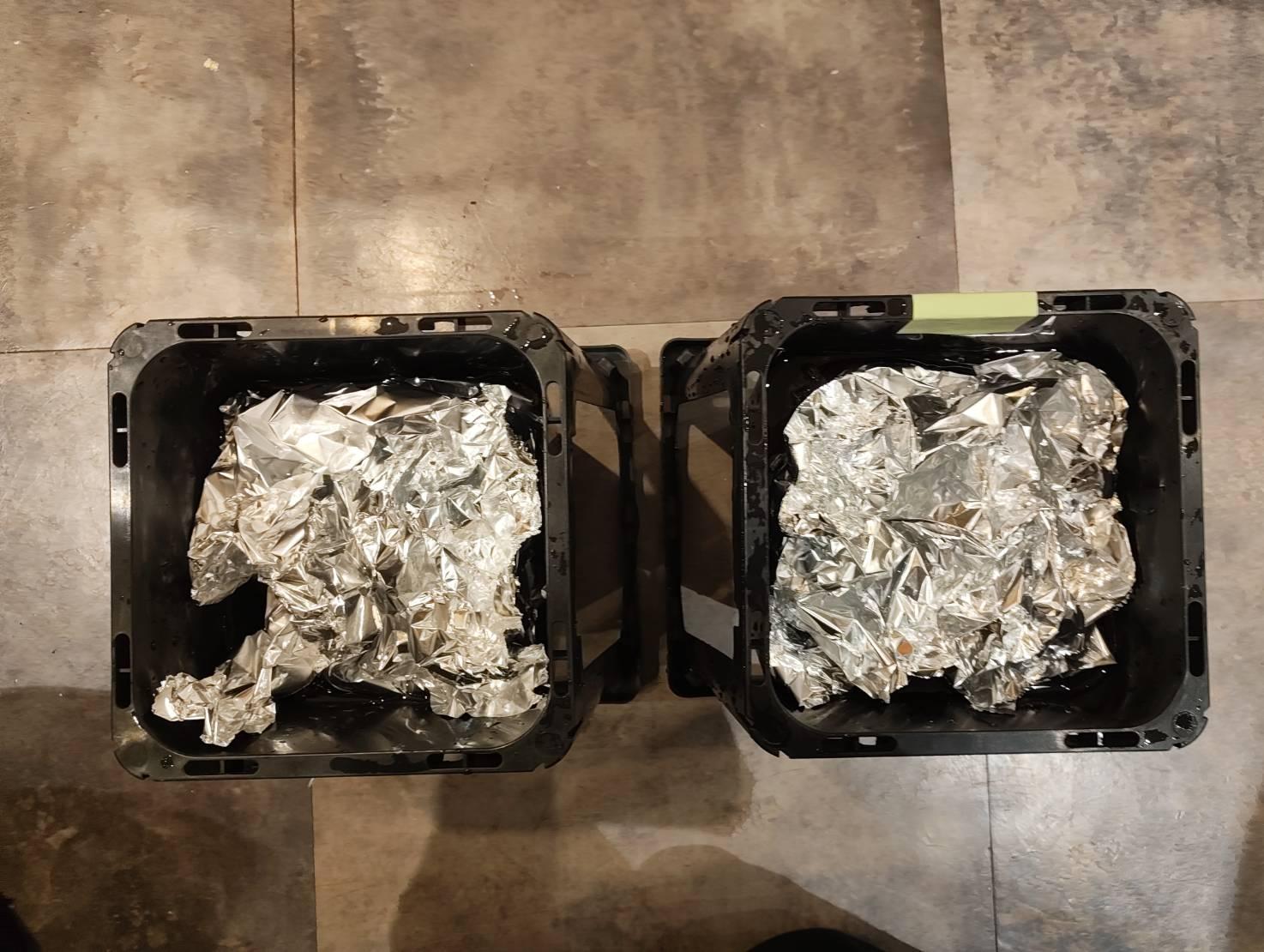
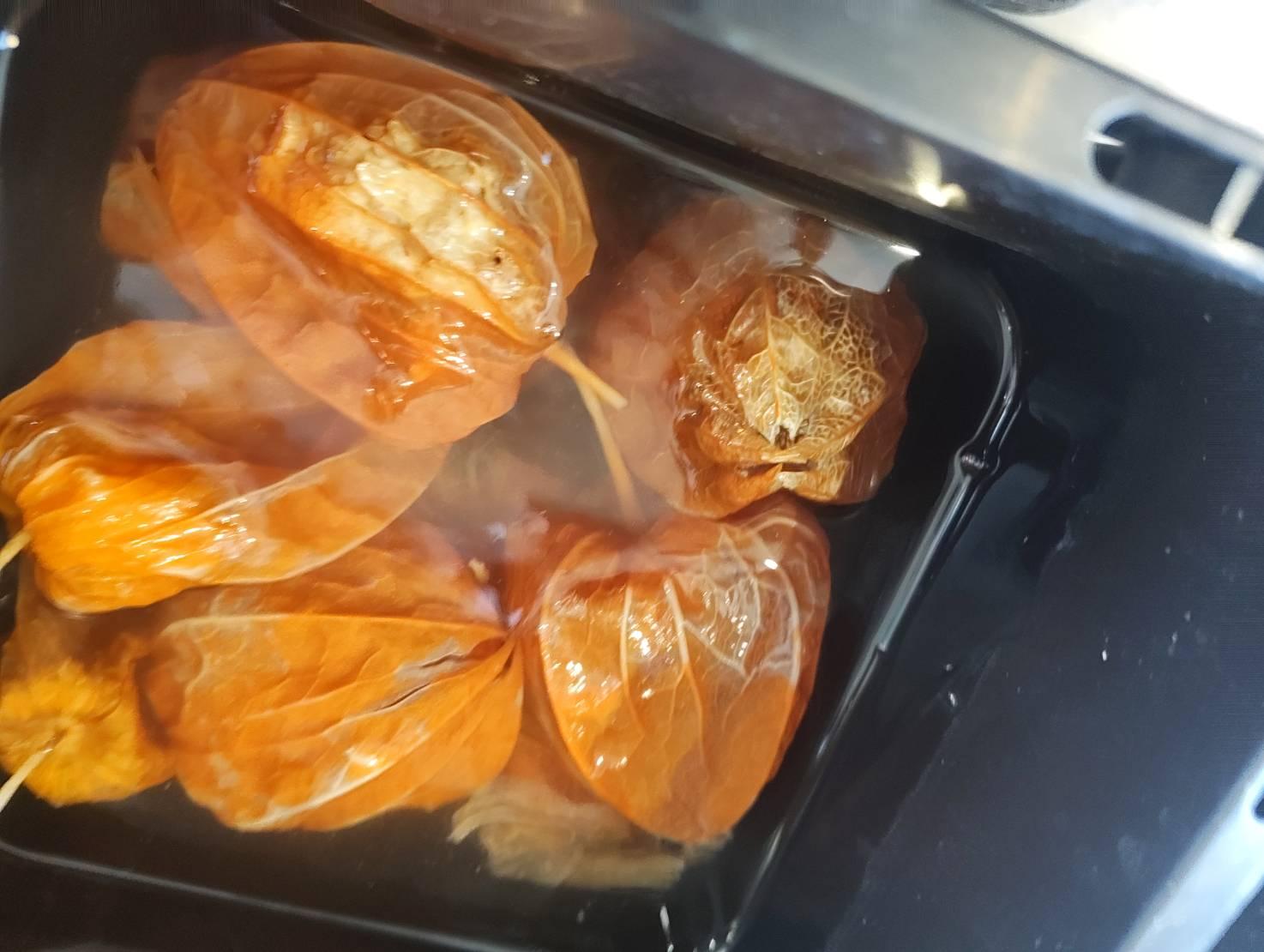
Here’s how they looked after two weeks:
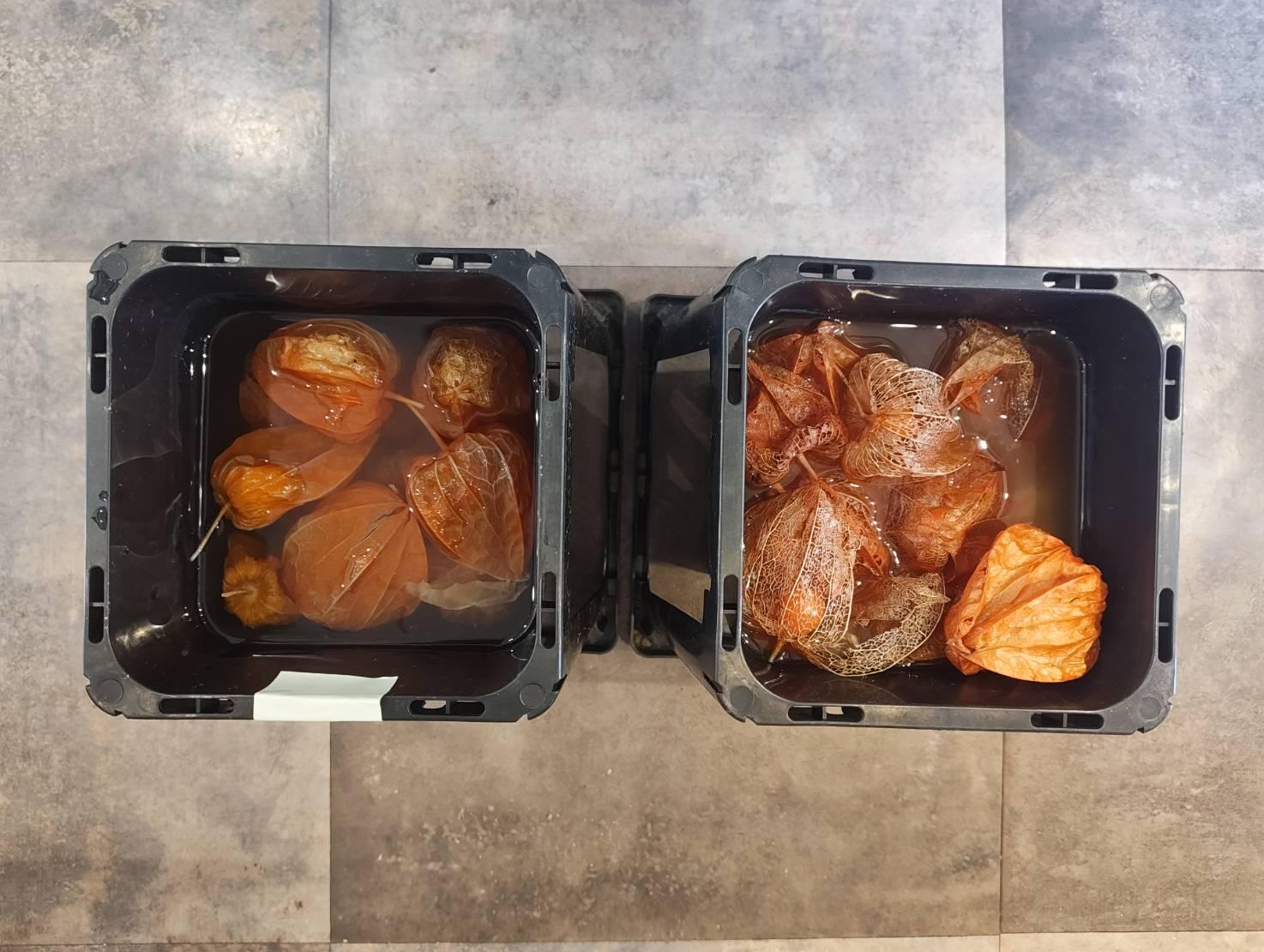
The fresh hoozuki:
The dried hoozuki:
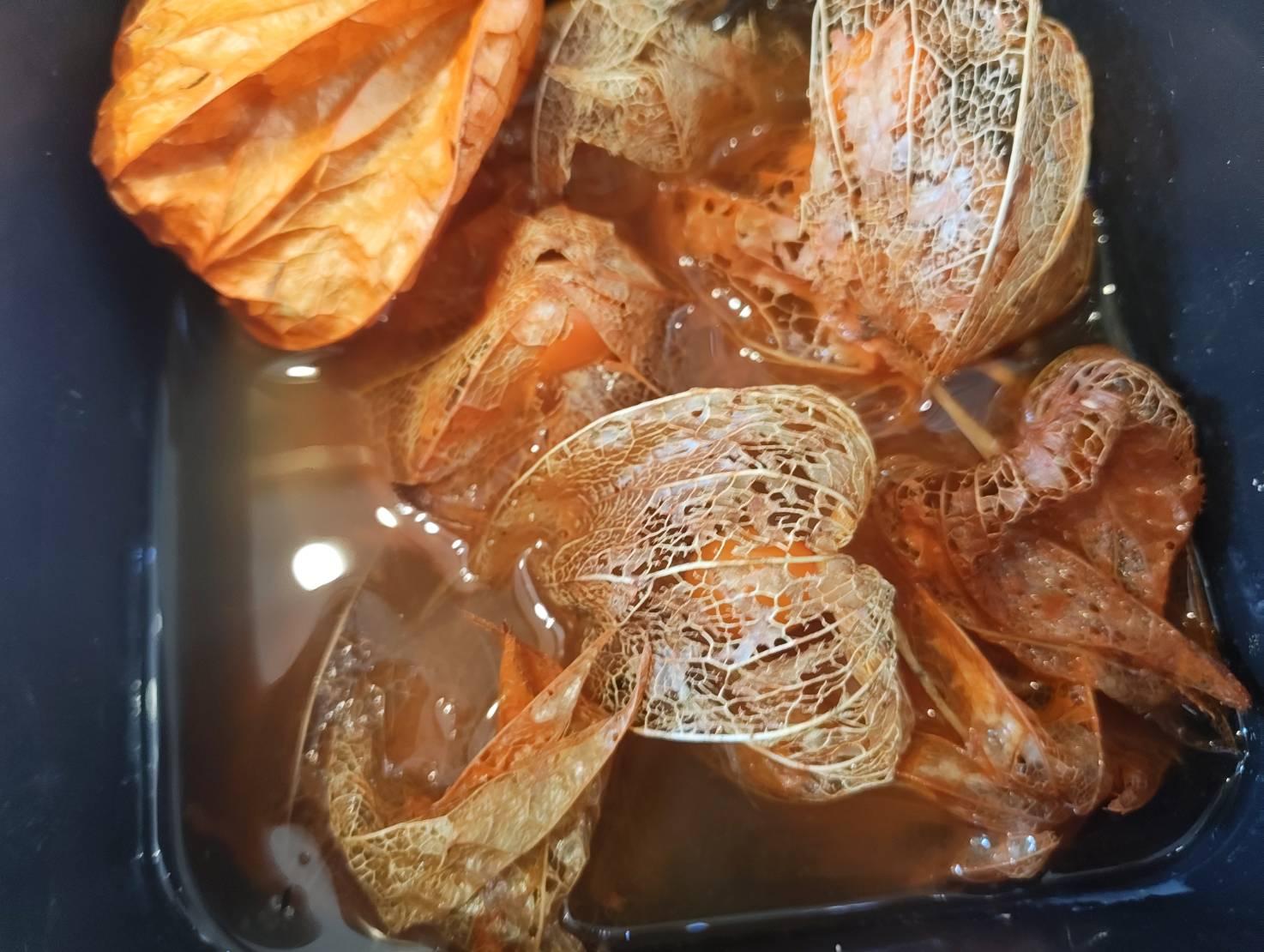
Comparing the two photos, the dried hoozuki seems to have shed more of its surface skin than the fresh one.
It may be that the less moisture a hoozuki holds, the thinner its skin becomes — and the more easily that skin dissolves once soaked in water.
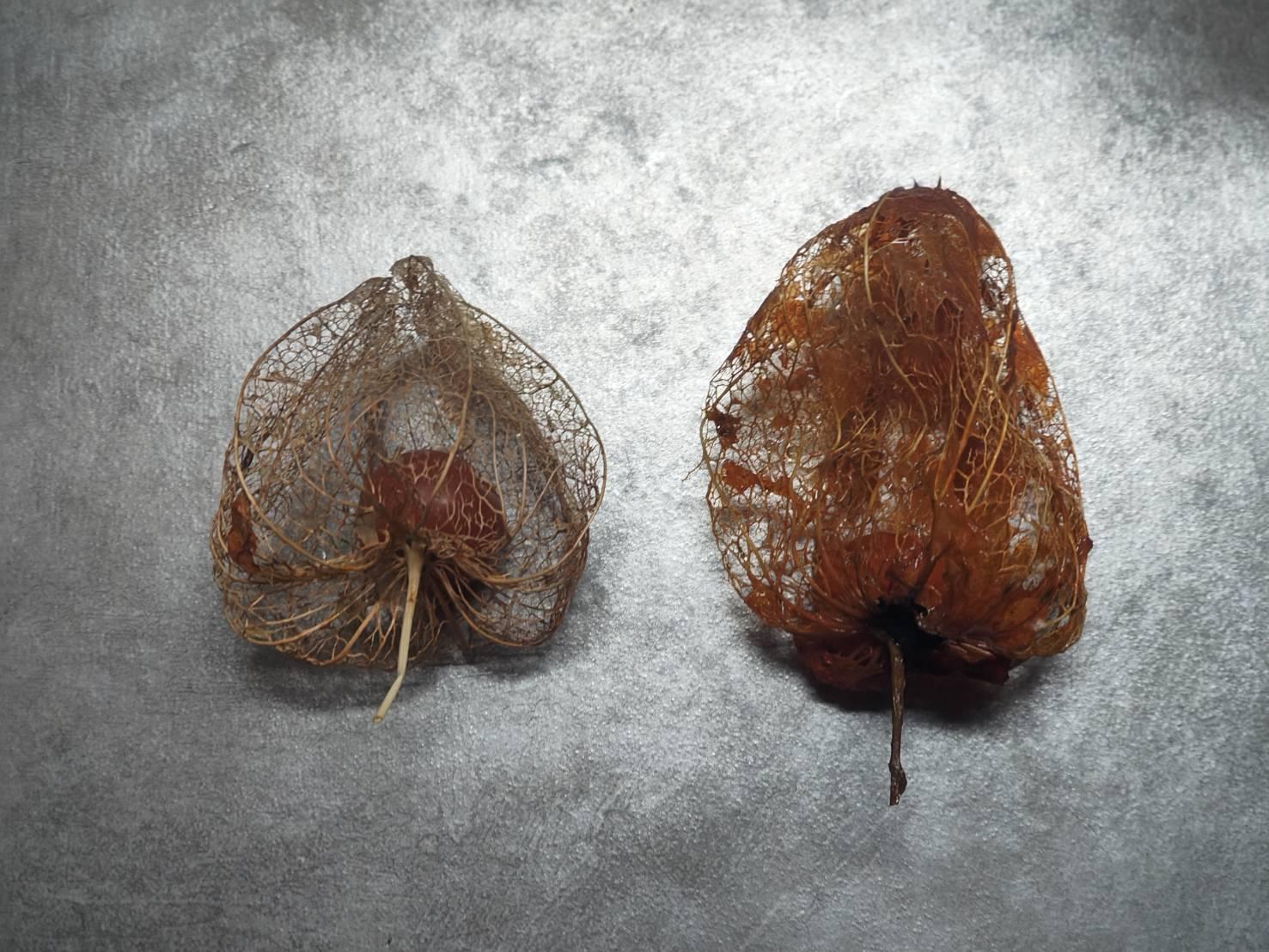
Let’s take out the ones whose skin has come off the most and compare them.
On the left is the dried hoozuki, on the right is the fresh hoozuki.
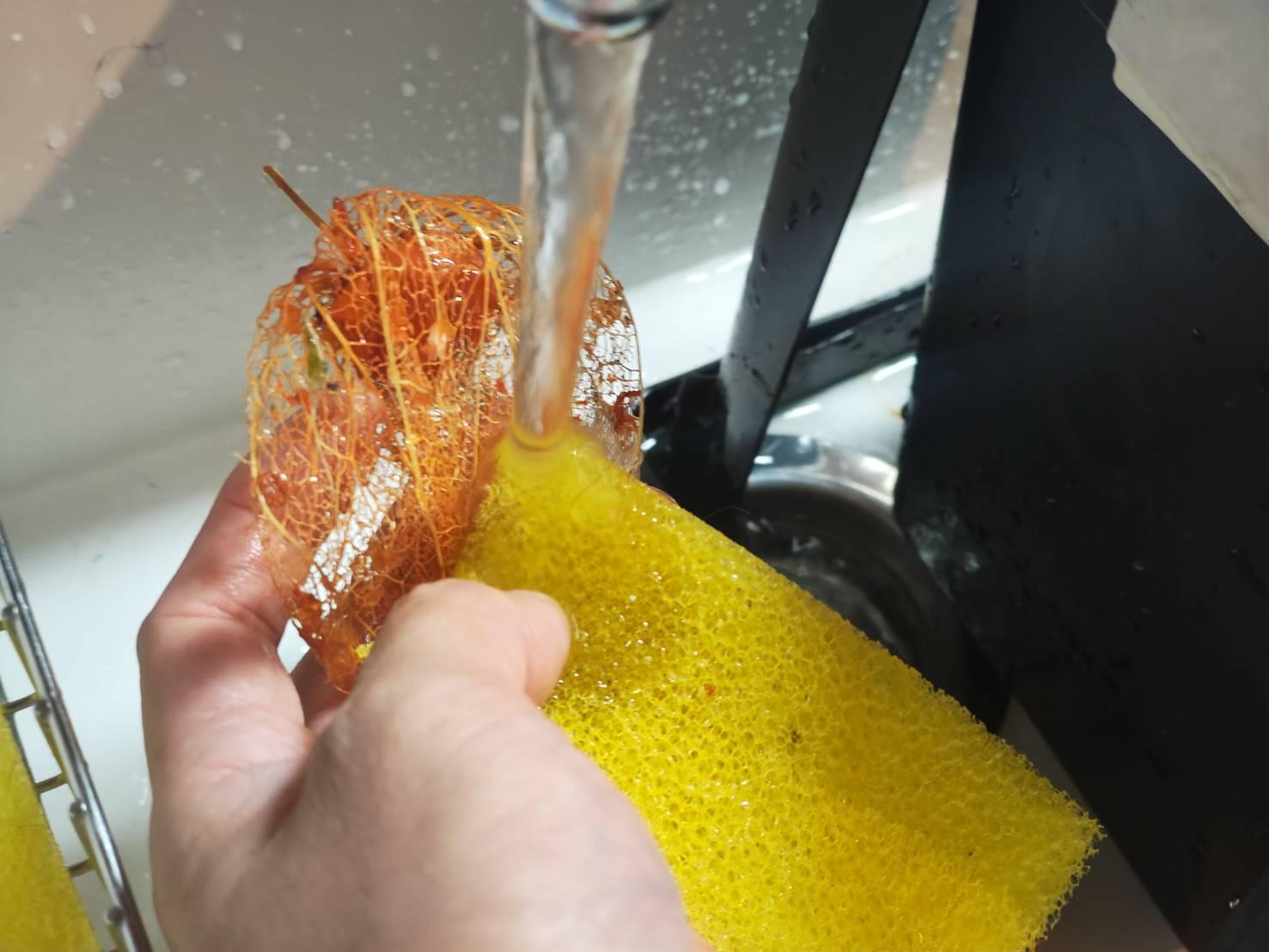
Removing the skin:
Peel away the remaining skin using tap water and a sponge.
Here they are, compared after peeling:
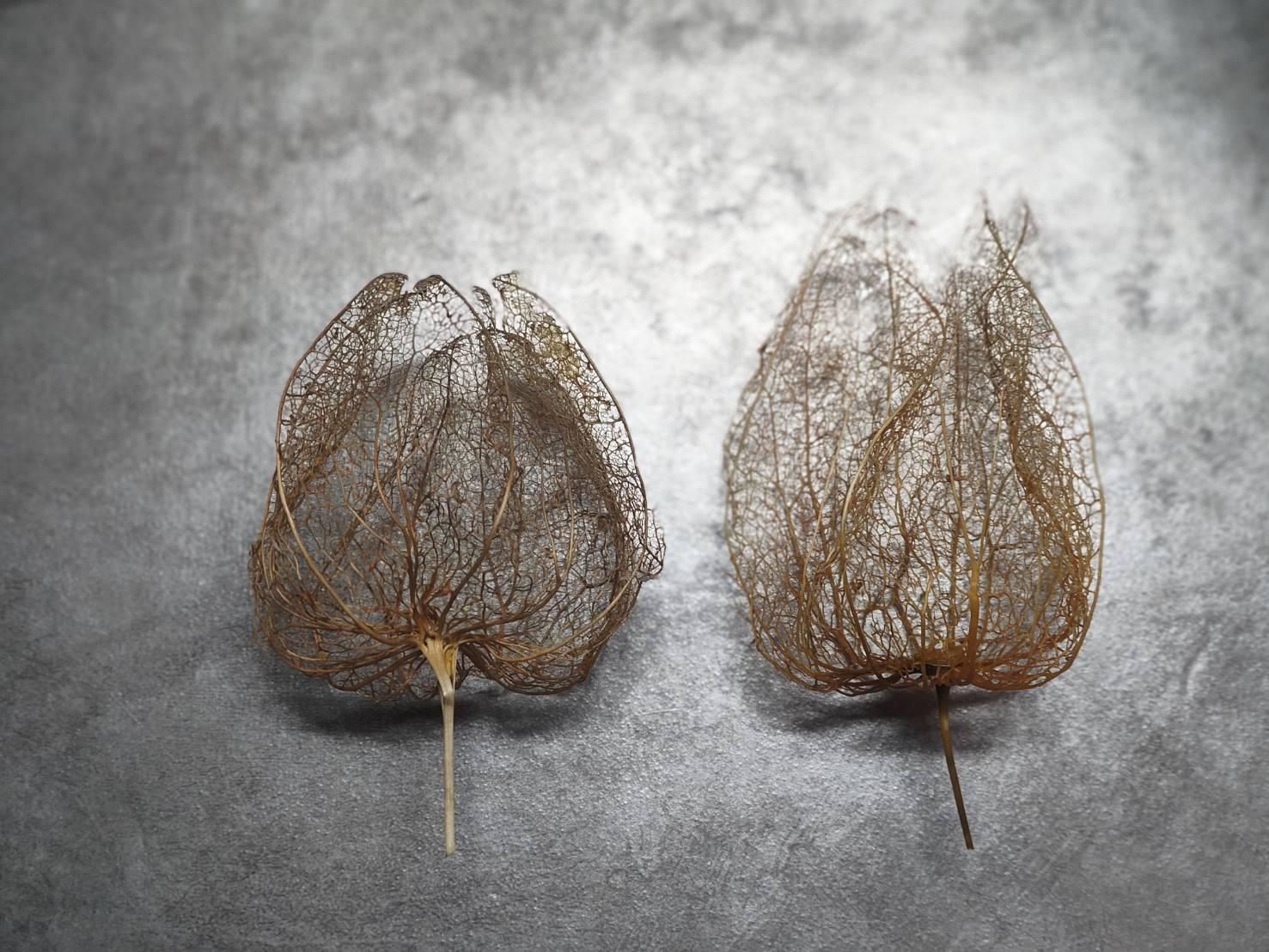
Results of the test:
Because the dried hoozuki had already lost almost all of its skin during soaking, we could peel it in a short time — so it did save time. However, the cracking at the tip stood out, and overall the coloring of the veins looked slightly darkened.
It seems that going through the drying stage first may have left the veins themselves a little damaged. (Note: results also vary from one specimen to another.)
If you plan to display the piece as an interior accent as is, soaking a fresh hoozuki and removing its skin is more likely to give a clean, beautiful finish — so for processing, fresh hoozuki is the better choice.
Ways to Use It
Here we’ll also introduce a technique for putting your sukashi hoozuki to use.
Using sukashi hoozuki in an arrangement:
STEP 1: Make the cuts
Take scissors to the veins of the sukashi hoozuki and make cuts along roughly four sides.
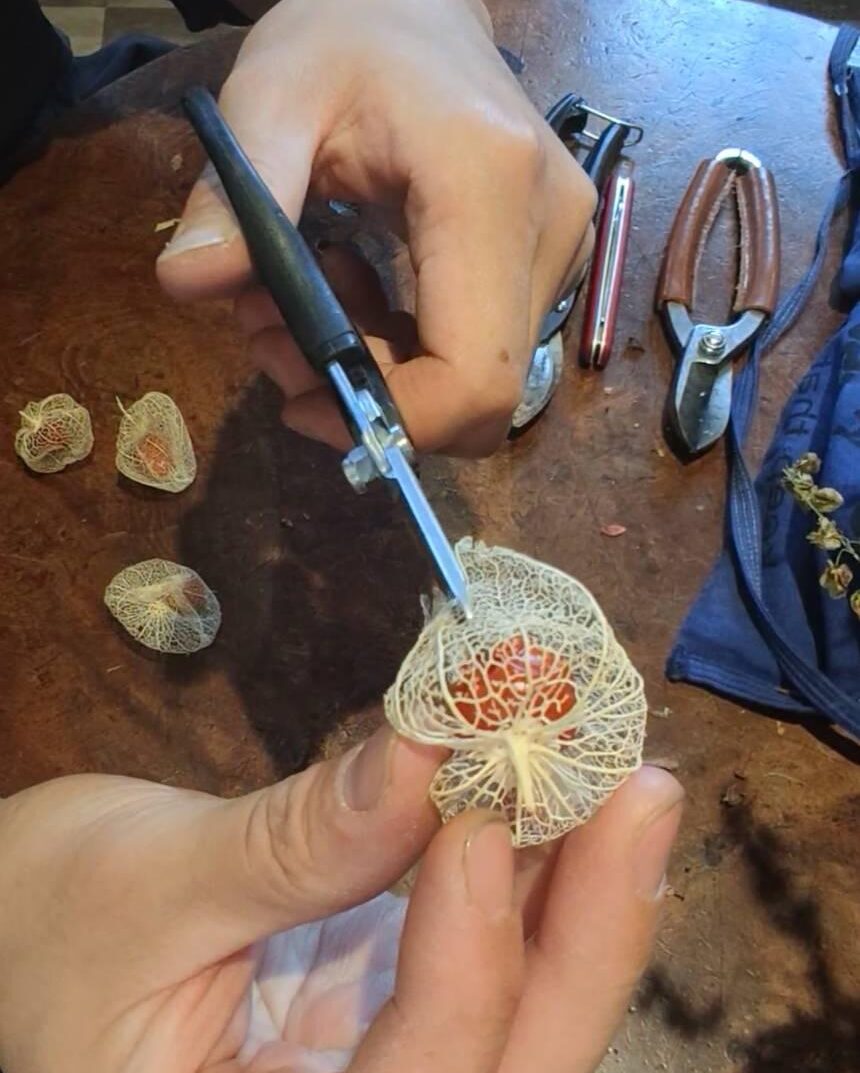
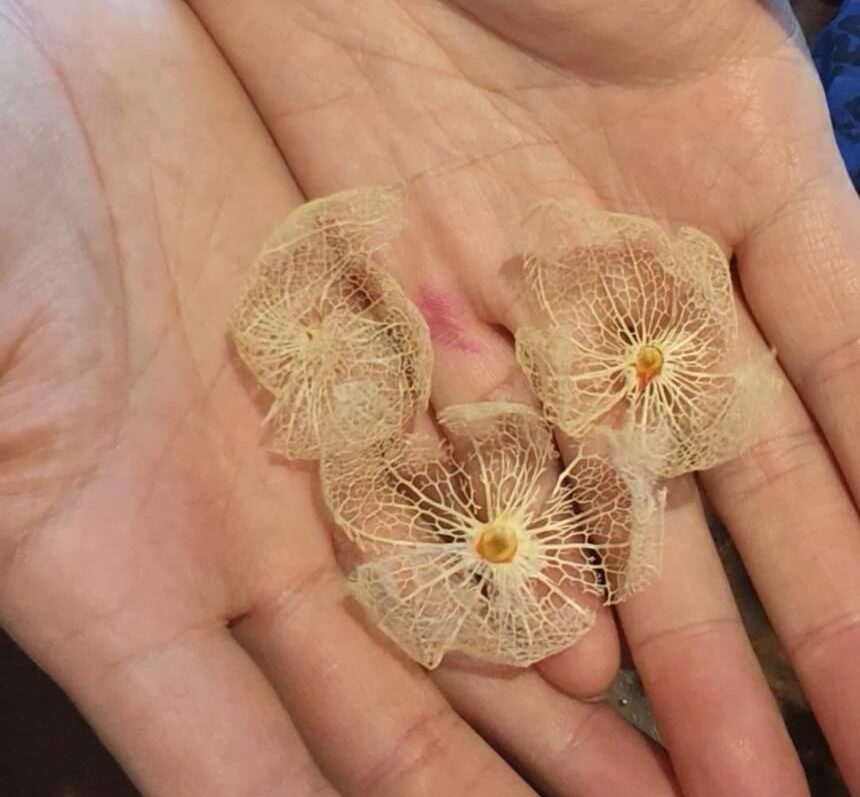
Here it is after being opened up:
Leave the base at the stem end uncut, and reshape the piece so it looks like an opened flower — this becomes the foundation for your arrangement.
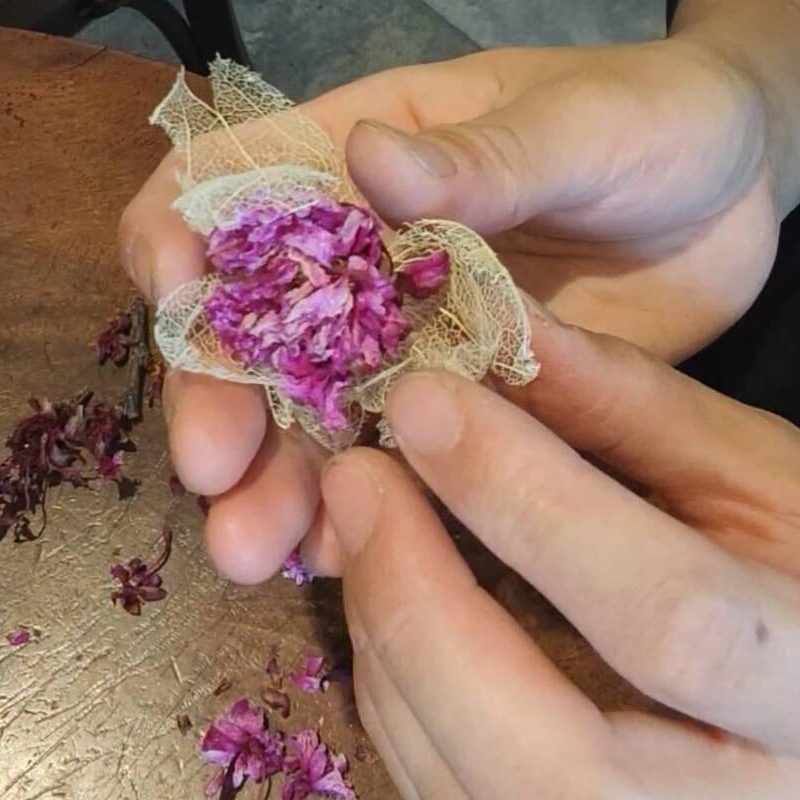
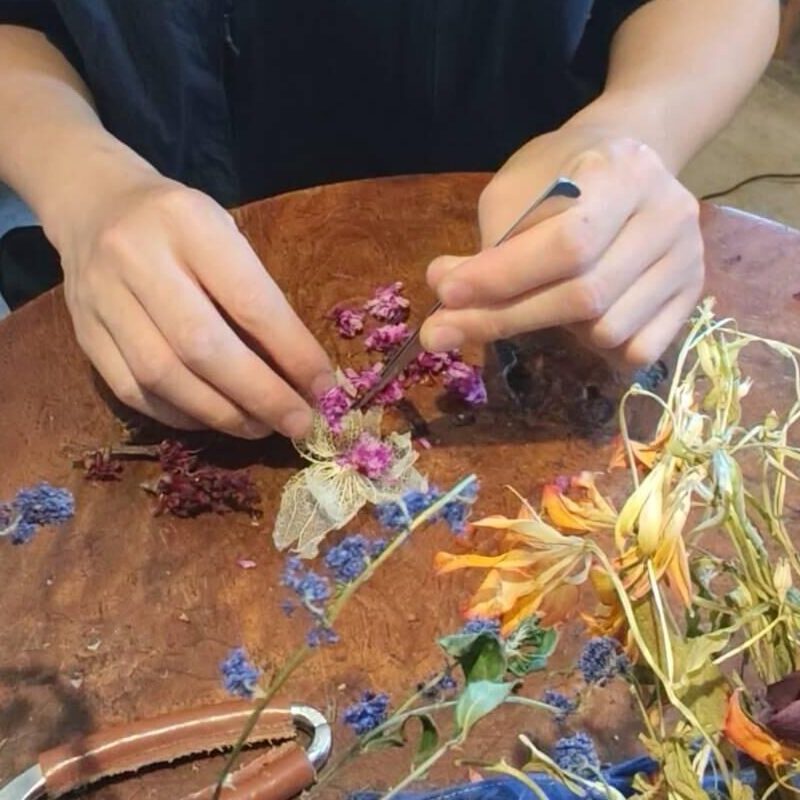
STEP 2: Add the flowers
Open the hoozuki up wide, then tuck flowers inside and arrange them.
Applying glue to the firm part at the base of the stem holds everything securely in place.
That said, glue can run down through the veins and overflow on the back side, so be careful with the amount you use.
 |
 |
How OUKA FLOWER Uses It in a Product
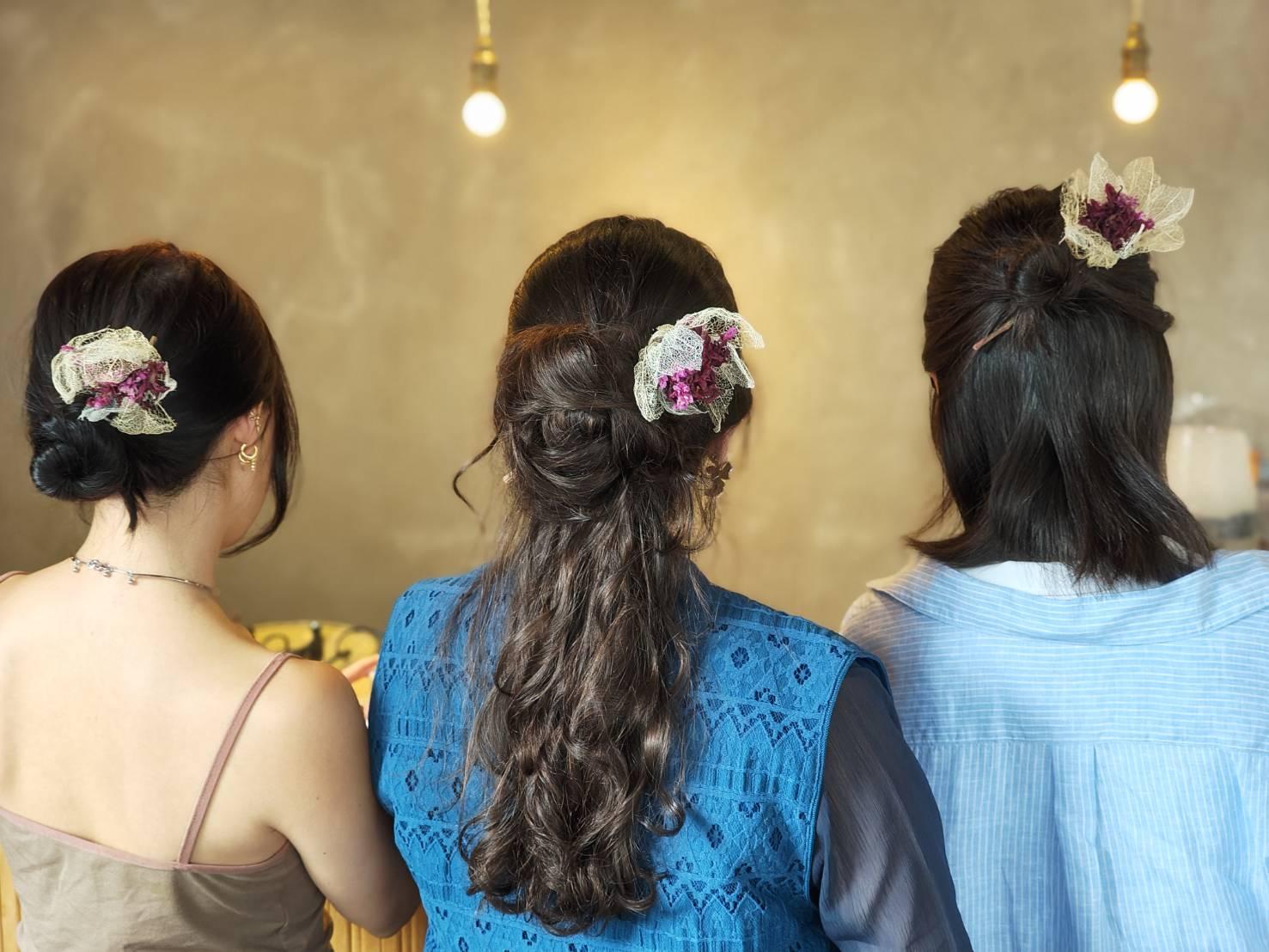
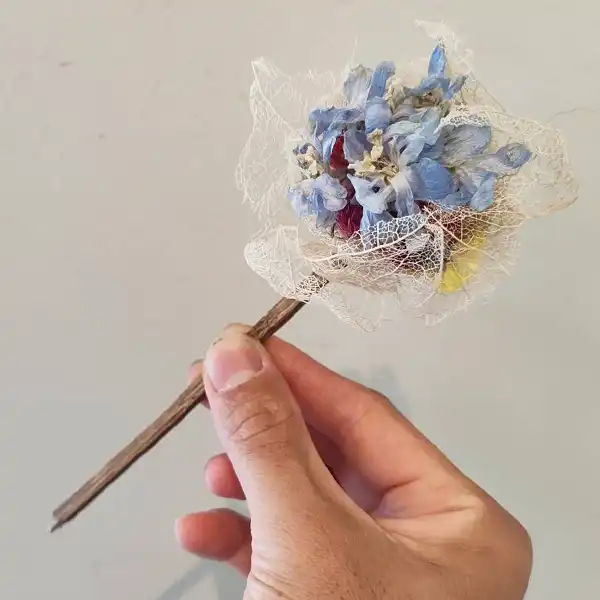
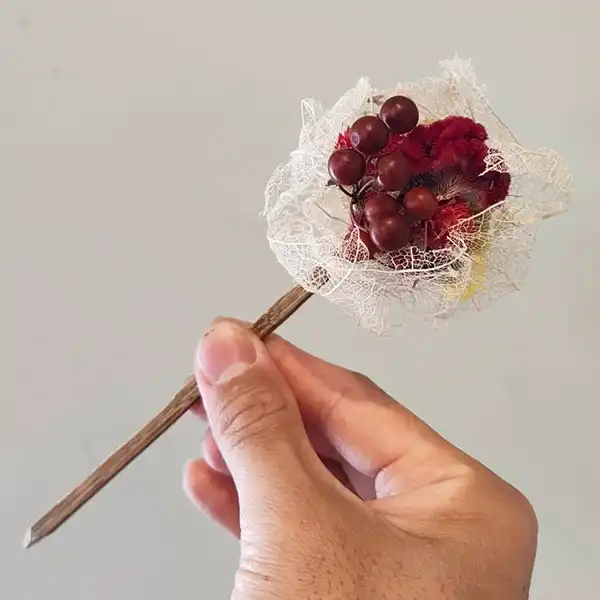
At OUKA FLOWER, we use this hoozuki arrangement in our kanzashi-style dried-flower accessory, HANABONBORI.
What is HANABONBORI?
It’s a kanzashi-style dried-flower hair accessory.
Built on a base of hand-bleached hoozuki and combined with colorful seasonal flowers, the product is designed to evoke a “bonbori” — the soft paper lantern that gently lights a space in Japan.
Each pick is carved by hand from a single piece of moso bamboo, so we hope you’ll enjoy the individual character that only handwork can give.
It works for everyday wear, as well as an accent that adds a touch of understated elegance at special occasions.
You can find the product page and details here:
HANABONBORI
 |
 |
You can also experience making this product yourself in a workshop.
We’ve written up the workshop experience in a separate article, so please take a look at that as well.
In Summary
This time we ran a comparison to peel hoozuki skin using the water-soaking method. Because it takes time, the key is to wait patiently for about two weeks without rushing.
It’s also important to prepare something to weigh the hoozuki down in place of a lid and keep it from floating (we used aluminum foil this time).
And after three to four days, the hoozuki skin dissolves and the water starts to go bad, so keep two things in mind: change the water regularly, and rotate the position of the hoozuki sitting at the bottom.
There are many ways to use it, but as an arrangement unique to OUKA FLOWER, we also introduce new applications by pairing it with other floral materials in our products.
Please be sure to check out our other articles, too.
Until next time — wishing everyone a wonderful dried-flower life!
A creator of Ouka, a dried flower brand born from the belief that every plant holds hidden beauty—just like the first person in human history ever to offer a flower. My mission is to rediscover and redefine that value, continuously shaping a world where dried flowers, people, and objects coexist in harmony.